ウルシオール皮膜におけるうねりパターンの試作A Study of Wrinkle Patterns in Urushiol Coatings
2026
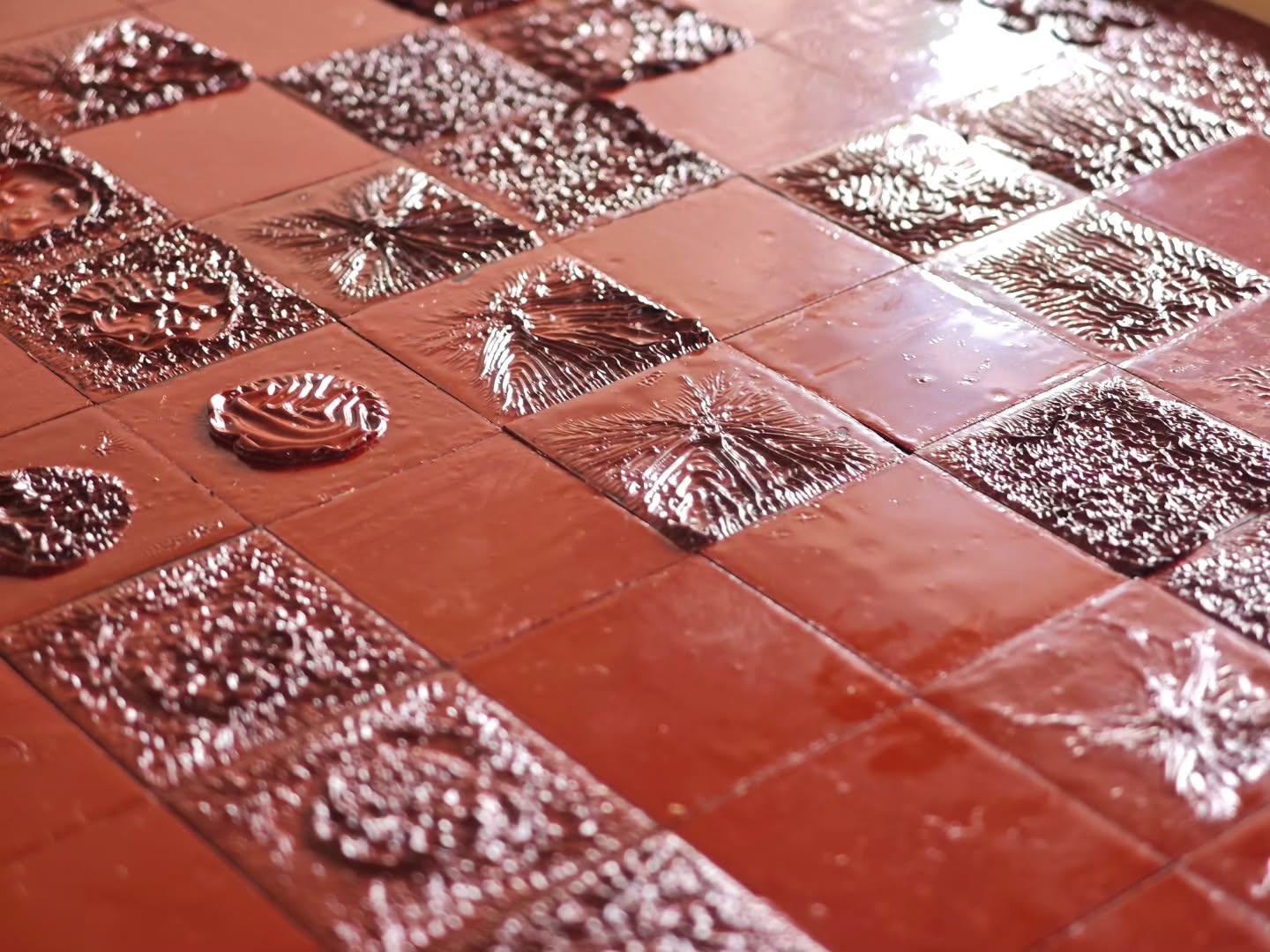
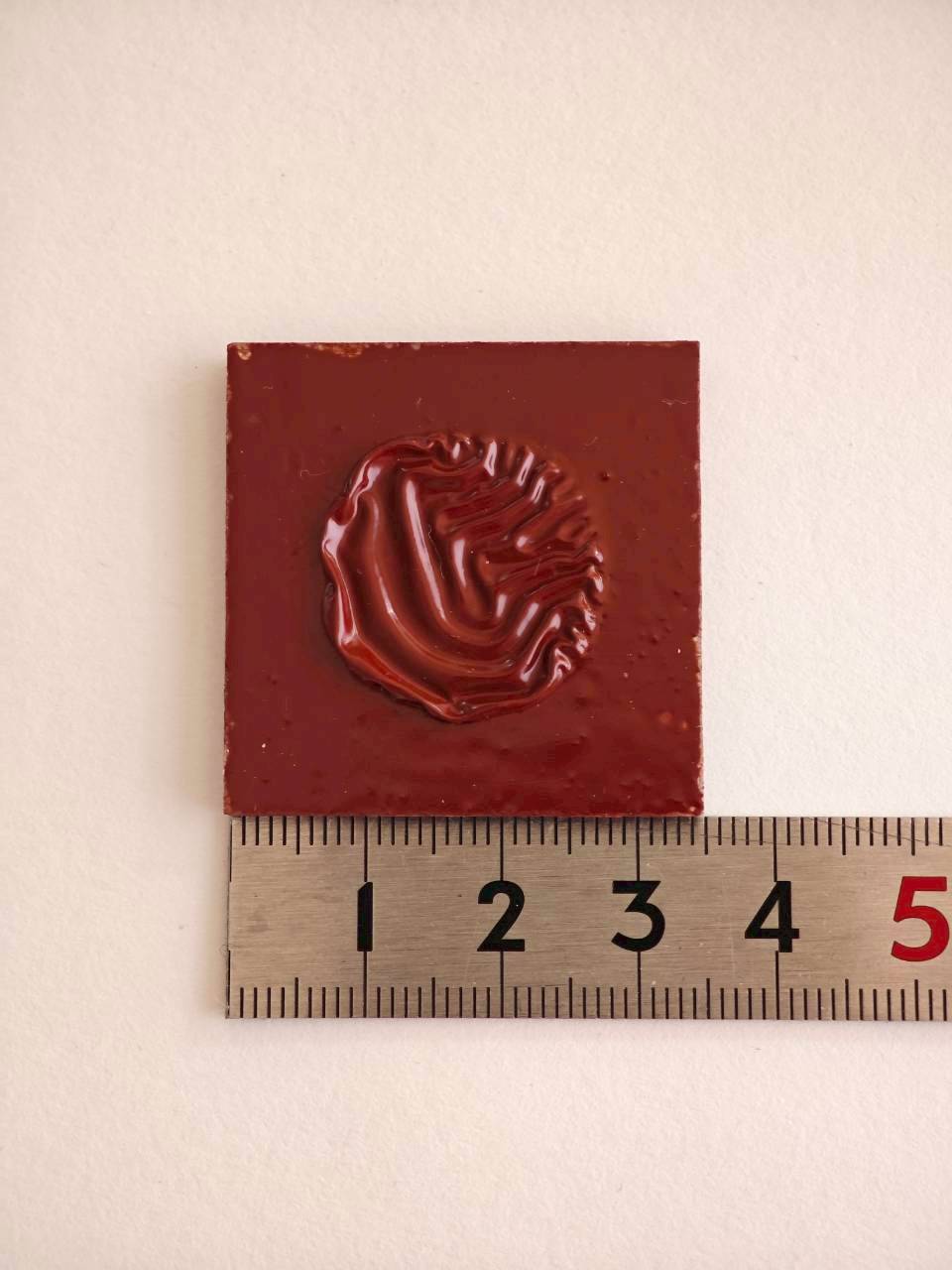
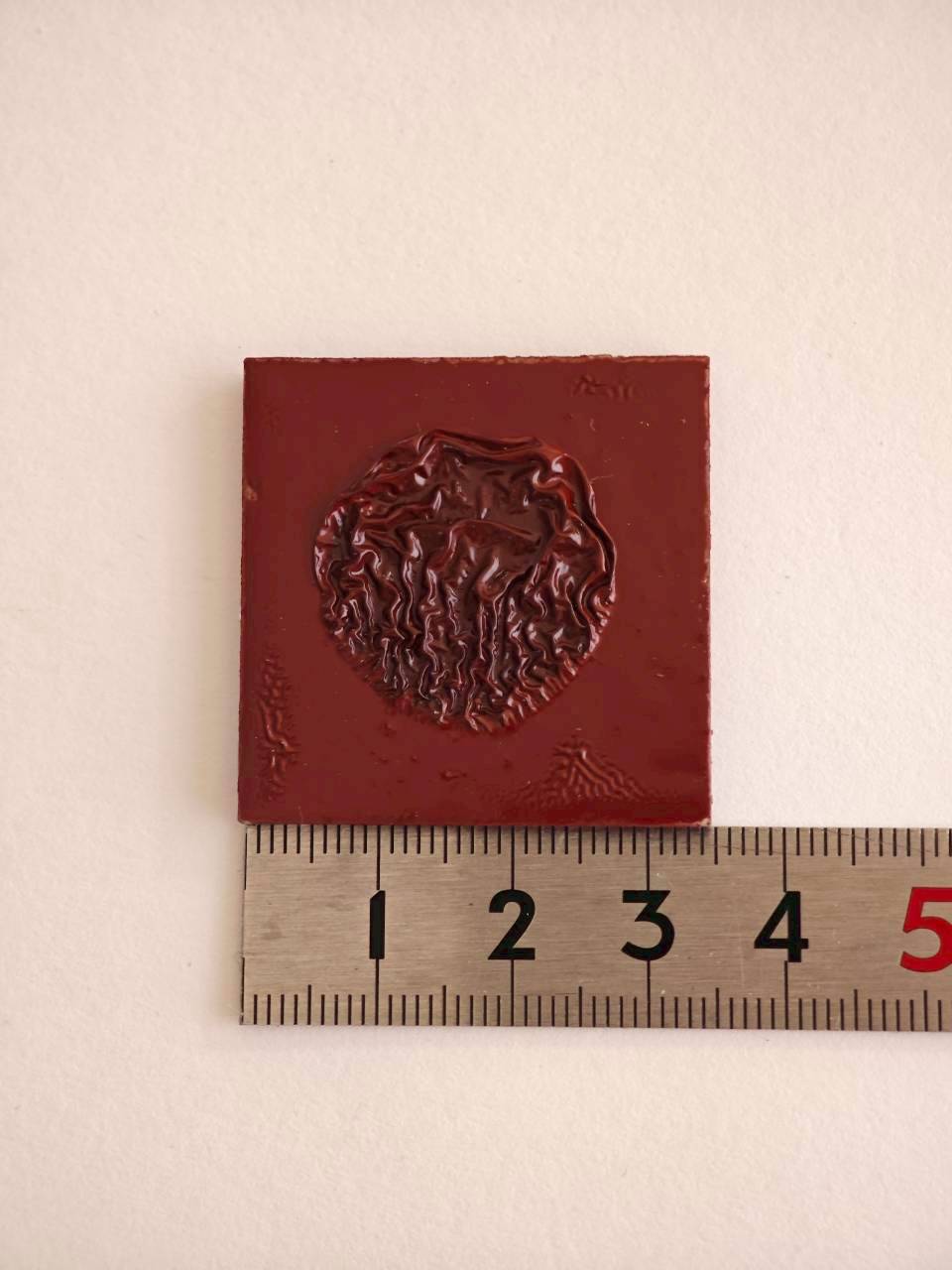
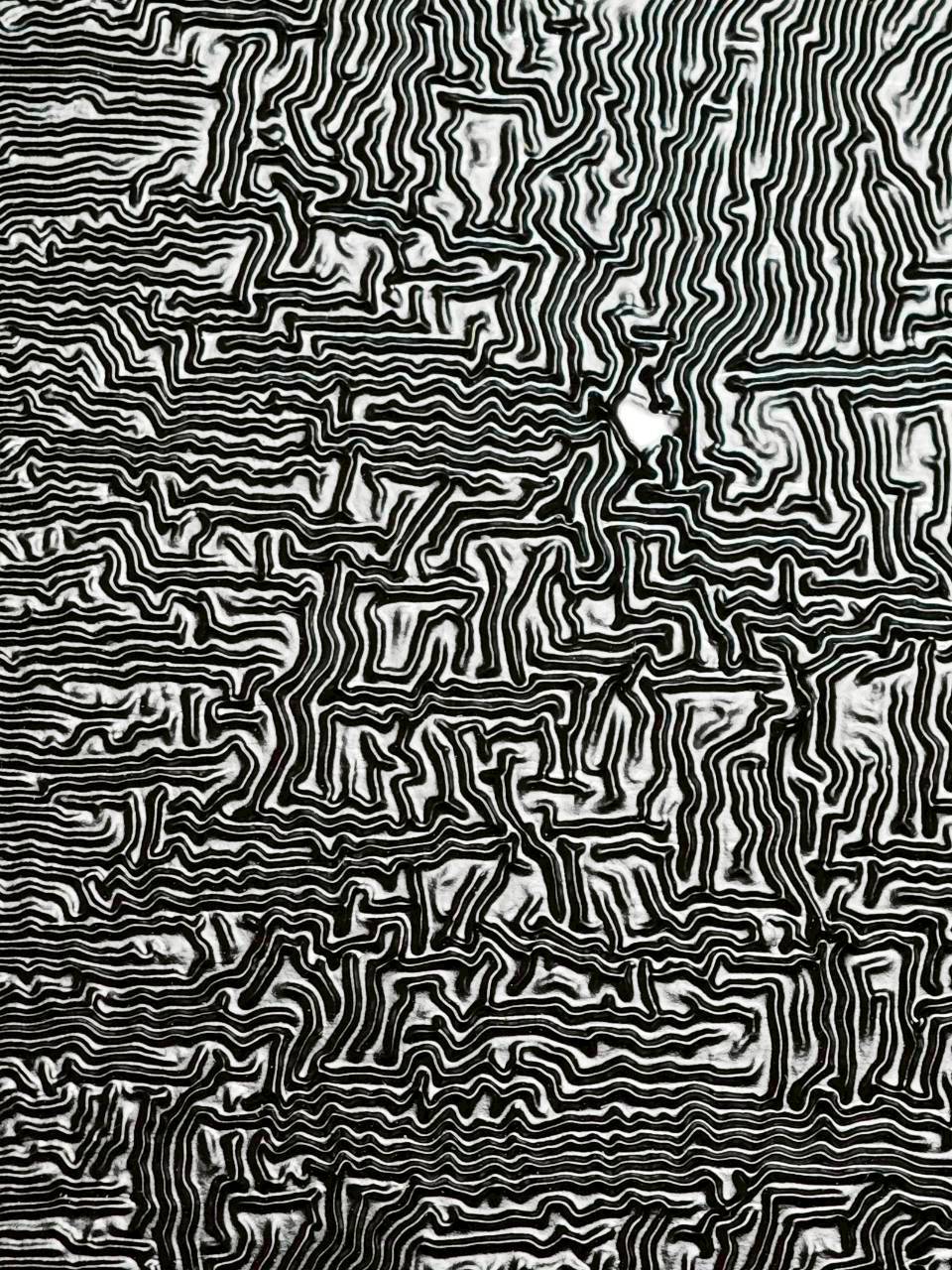
1: 展示作品(Instagram @yuta.origami)/2–3: 試作サンプル/4: シワパターンの拡大観察/動画:厚塗り漆の硬化過程(3000倍速)1: Exhibited piece (Instagram @yuta.origami) / 2–3: Prototype samples / 4: Close-up of the wrinkle pattern / Video: curing process of thickly applied lacquer (3000x speed)
350×280×30mm/漆、アクリル、檜/2026
下田悠太(@yuta.origami)・中原風香(@fooooka)
高温多湿の場所で漆を厚く塗ると、表面にシワが生まれます。表面と内側で固まる速さが違うからです。漆では昔から、これは失敗とされてきました。でも私たちは、このシワも漆の新しい表情になると考えました。さまざまな条件でできるシワを、観察して研究しています。
漆は、乾かすのではなく、湿気を吸って固まります。だから梅雨のような環境がシワを生みやすいのです。漆工芸には、唐塗りや七々子塗りのように、わざと凹凸をつくって模様にする技法があります。私たちは、エラーとされてきたシワにも同じ可能性を見ています。条件を変えながら、うねりのパターンを試作しました。
「AWASE gallery 1st Anniversary」(AWASE gallery、東京・新宿、2026年6月6日〜21日)にて発表。
350×280×30mm / Urushi (Japanese lacquer), acrylic, hinoki / 2026
Yuta Shimoda (@yuta.origami) × Fuuka Nakahara (@fooooka)
When lacquer (urushi) is applied thickly in a hot, humid environment, wrinkles appear on its surface — because the surface and the layers beneath it cure at different speeds. In traditional lacquerware, this has long been considered a flaw. But we came to see these wrinkles as a new expression of the material itself, and have been observing and studying the wrinkle patterns that emerge under a range of conditions.
Lacquer doesn't dry — it cures by absorbing moisture, which is why humid, rainy-season conditions tend to produce wrinkles. Japanese lacquer craft already has techniques, such as karanuri and nanako-nuri, that deliberately create texture and pattern through unevenness. We see the same potential in what has long been treated as an error. By varying the conditions, we prototyped a range of wrinkle patterns.
Presented at "AWASE gallery 1st Anniversary" (AWASE gallery, Shinjuku, Tokyo, June 6–21, 2026).