四面体什器 feat. Graham BellTetrahedral Modular System feat. Graham Bell
2026
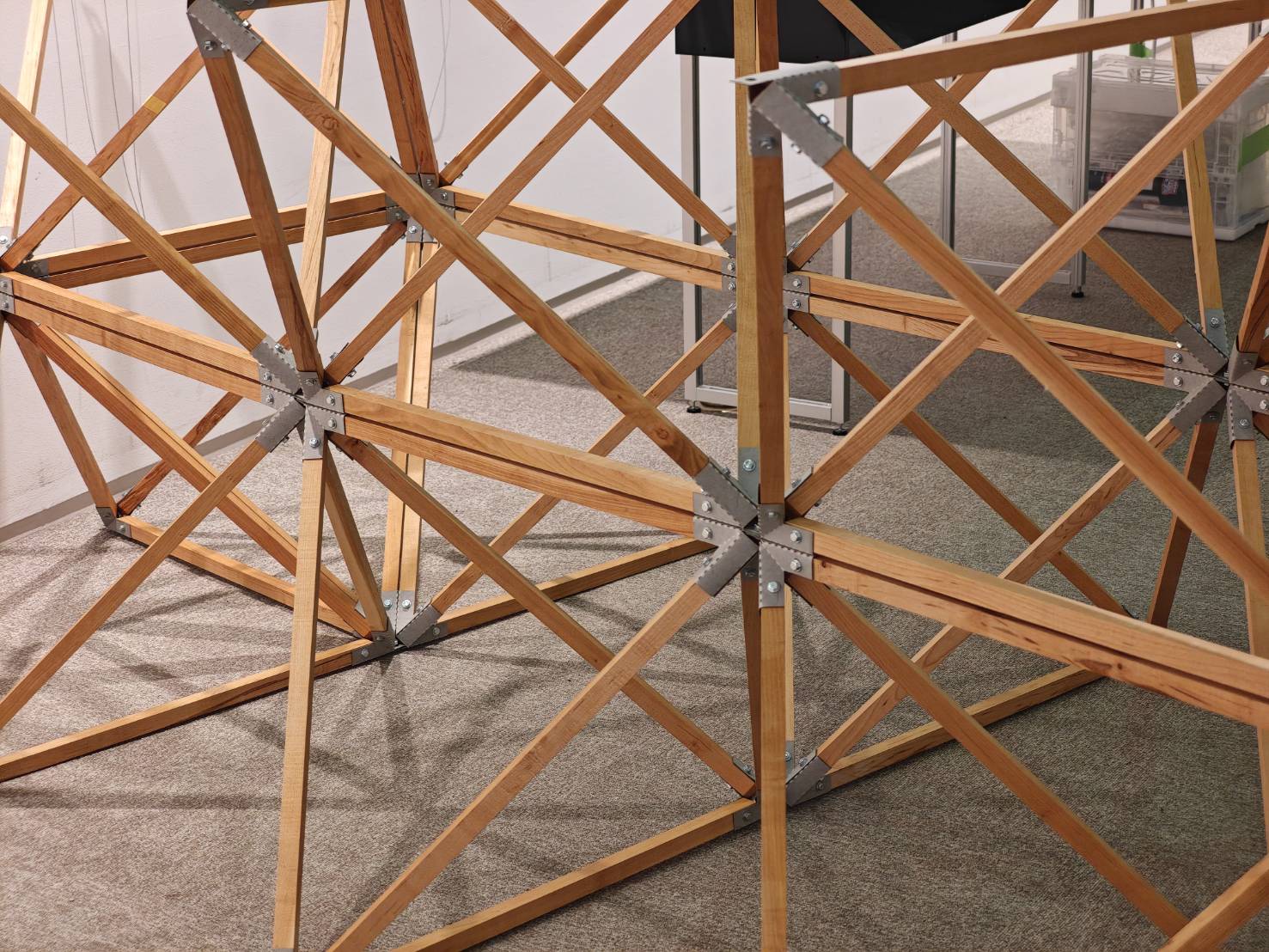
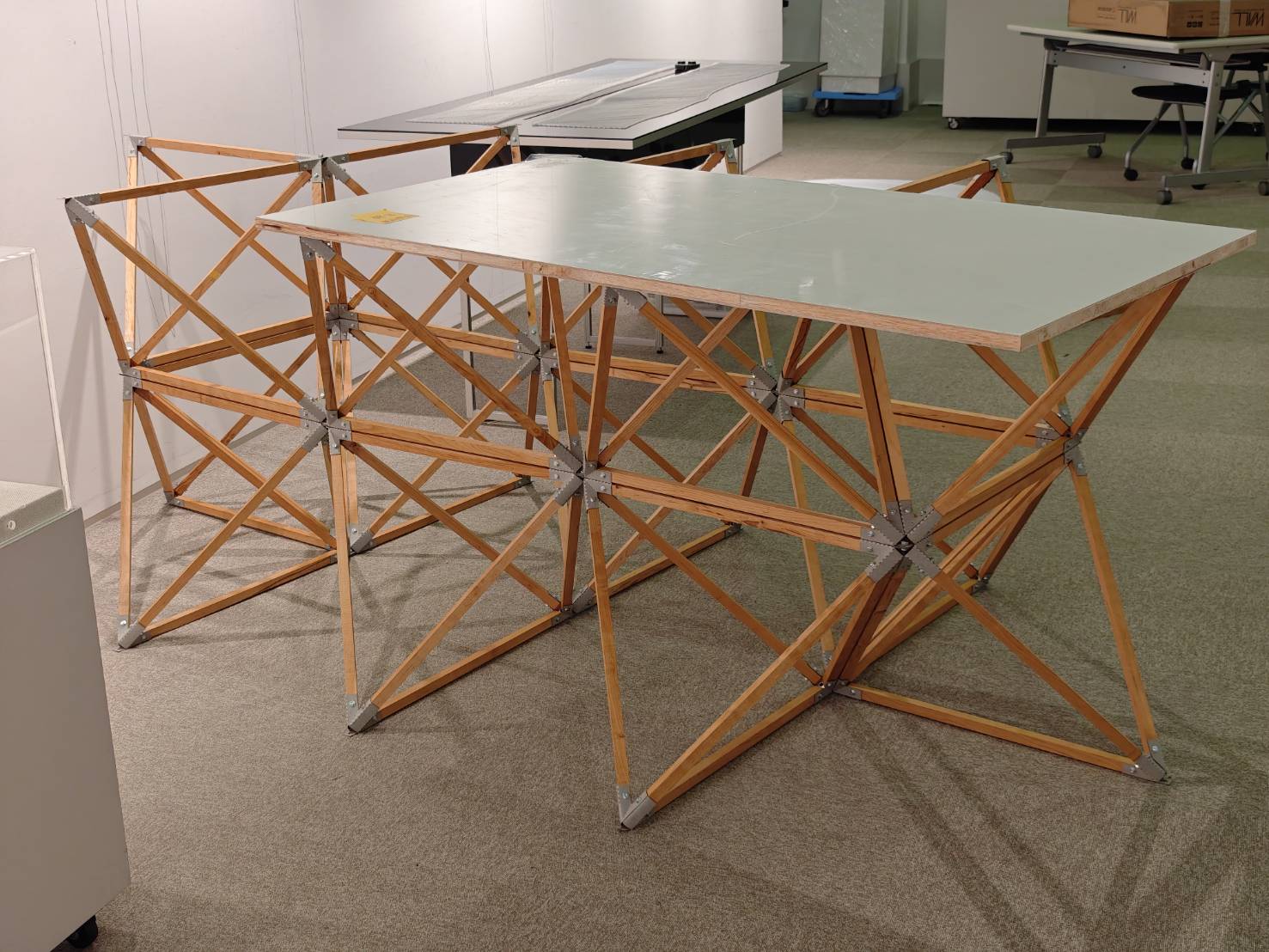
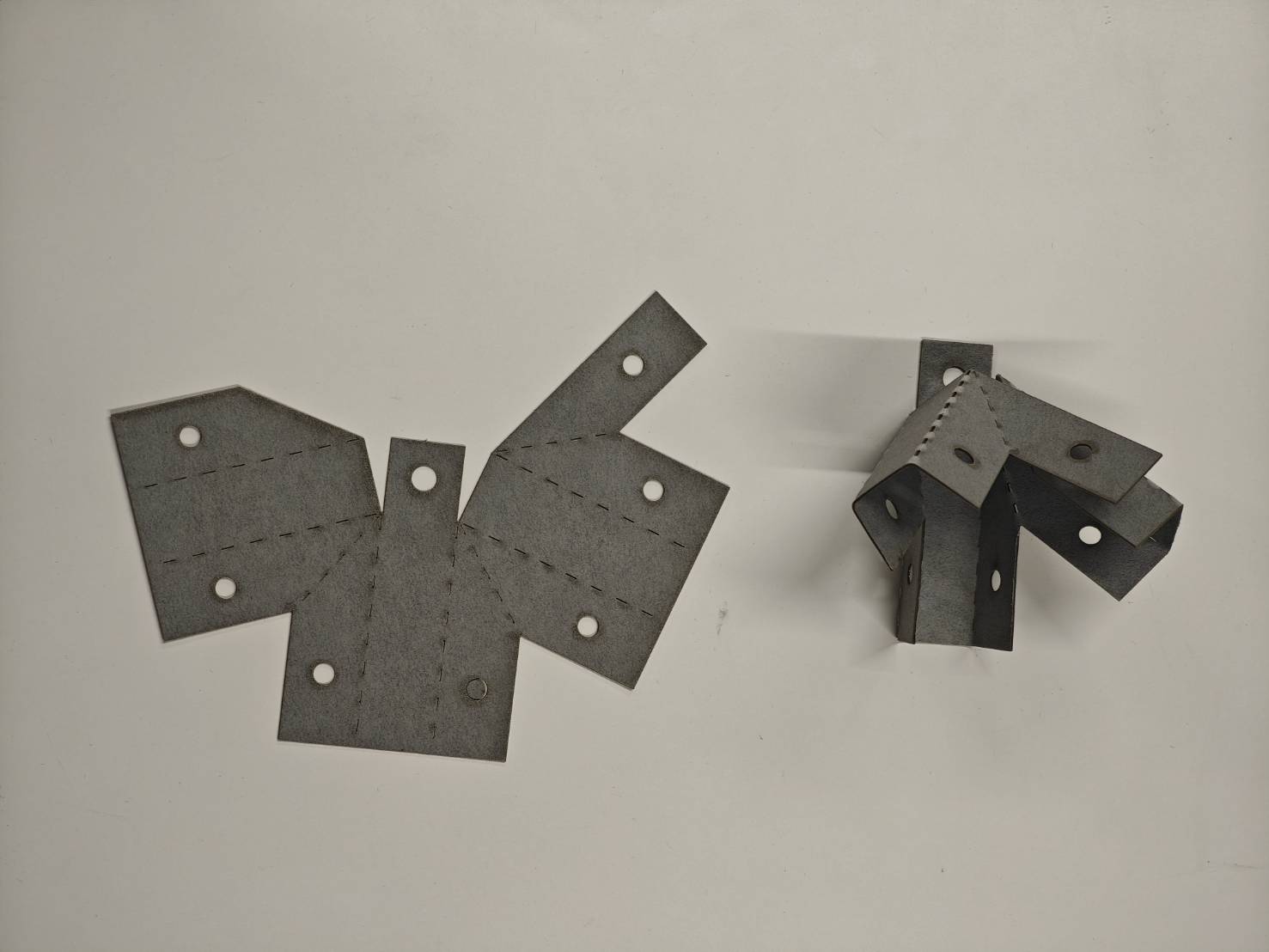
四面体什器システム|下田悠太(@yuta.origami)、金岡大輝(@dk____gram)/協力:黒田晃佑(@puka_puka_kousaku)/展示:つながるかたち展06(東京大学駒場博物館、2026年7月18日–9月13日)
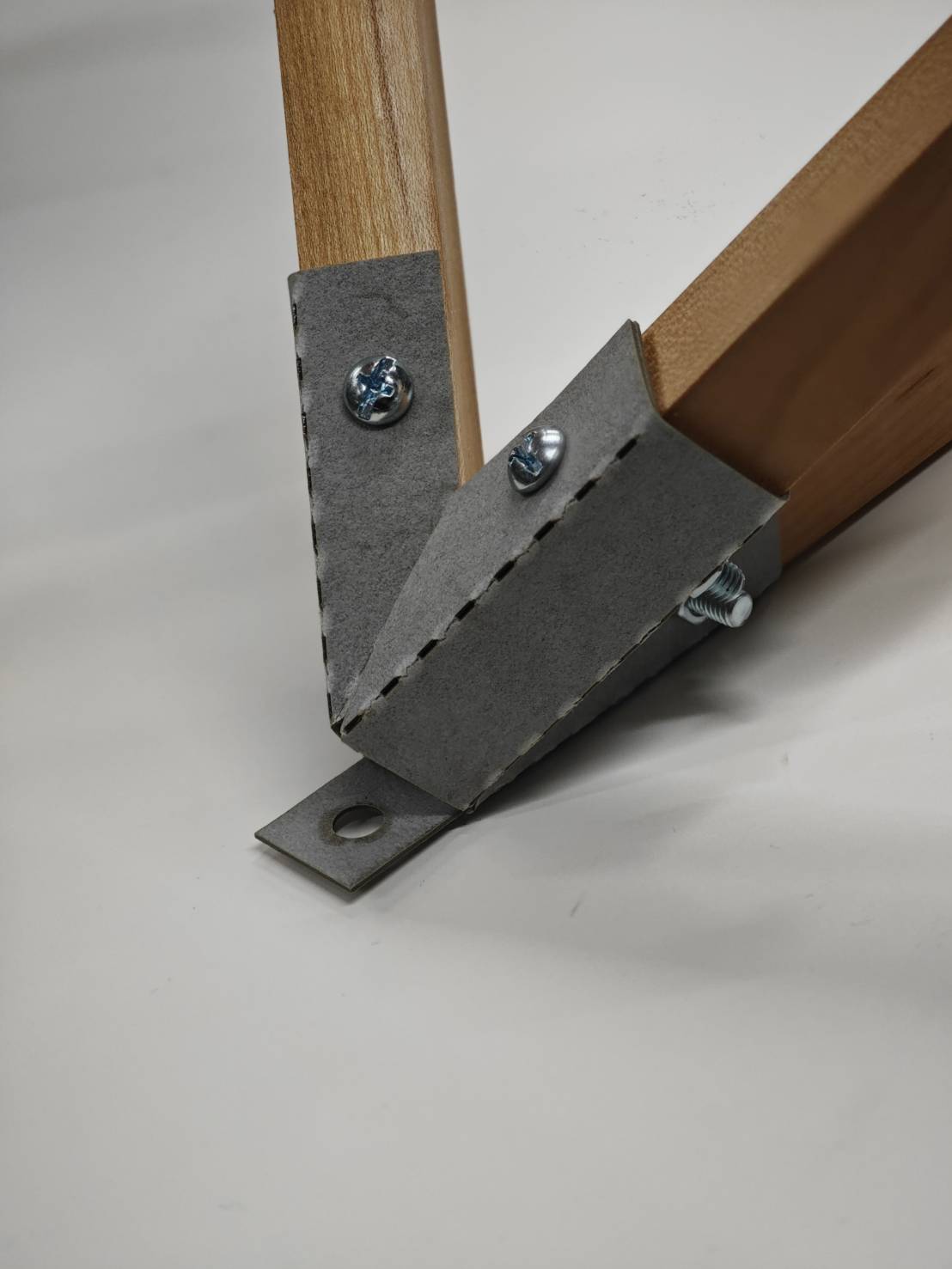
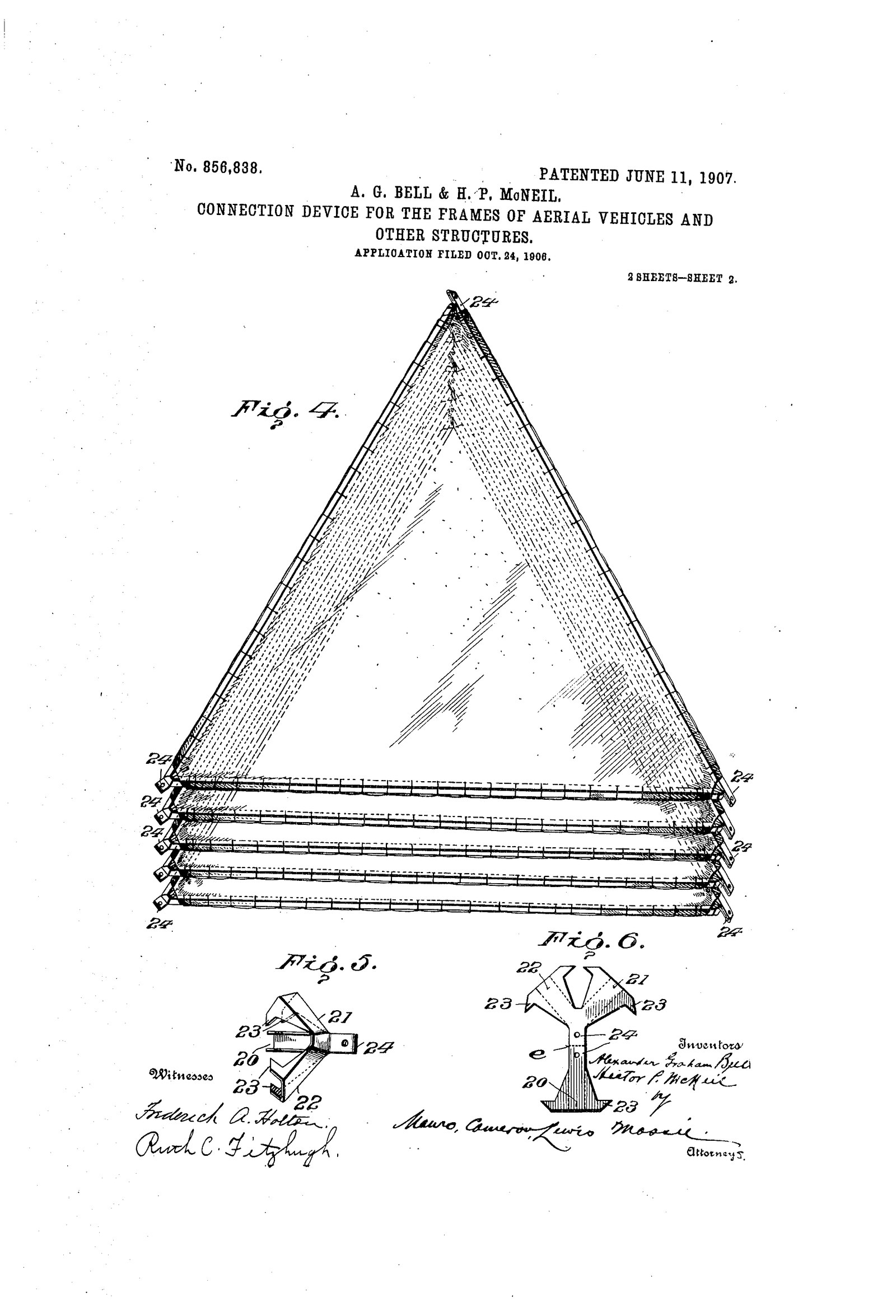
電話機の発明で知られるグラハム・ベルが、1907年に特許を取得した板金ジョイントを再解釈したモジュール什器です。紙(バルカナイズドファイバー)を用いた折り紙のような接合機構により四面体トラスを構成し、什器へと応用しました。ベルは当時、四面体の凧をつくるためにこの板金ジョイントを開発しました。本作品では当時のジョイントをベースに展開図を改良し、部材間の力が最適に伝達されるよう設計しています。
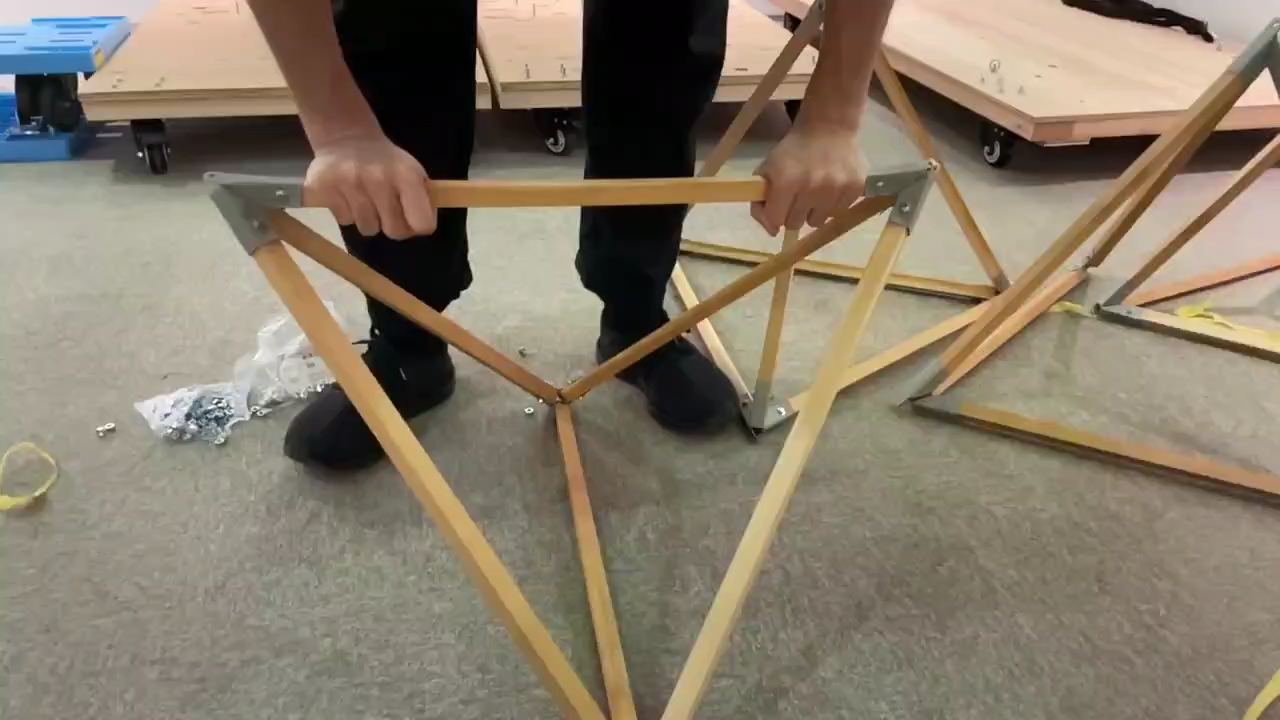
18mm角・長さ700mmの角材6本と接合部4個で、正四面体のユニットが1つできます。接合部から出したタブをボルトで留めてユニット同士をつなぎ、1点には最大4ユニットが集まります。組み立て時間はユニット1つあたり約20分です。
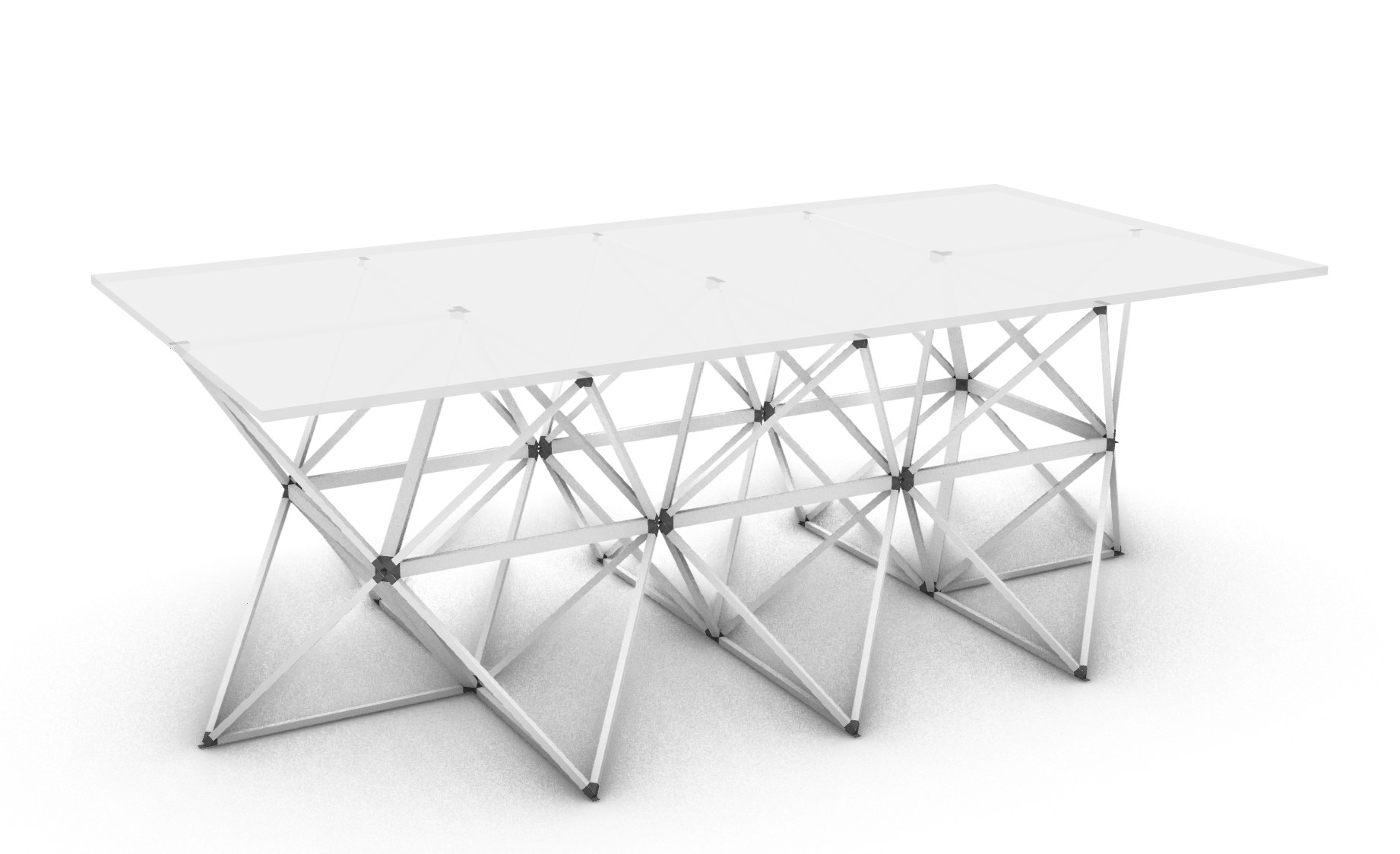
展示台(W2835×D1435×H1013mm)は、ユニット16個、接合部64個、角材96本でできています。組み合わせ方で多様な形になるほか、分解してコンパクトに積むことも可能です。
Tetrahedral Modular System|Yuta Shimoda (@yuta.origami), Daiki Kanaoka (@dk____gram) / Cooperation: Kosuke Kuroda (@puka_puka_kousaku) / Exhibited at CONNECTING ARTIFACTS 06, The University of Tokyo Komaba Museum, 18 July – 13 September 2026
This modular fixture reinterprets the sheet-metal joint patented in 1907 by Alexander Graham Bell, known for inventing the telephone. Using an origami-like connection mechanism made of paper (vulcanized fibre), it constructs a tetrahedral truss that has been adapted into a furniture system. At the time, Bell developed this sheet-metal joint to build tetrahedral kites; based on the original joint, this work refines the development pattern to ensure optimal force transmission between the structural members.
Six 18 mm square bars, 700 mm long, and four joints make one regular-tetrahedron unit. Tabs projecting from the joints are bolted together to link units, with up to four units meeting at a single point. Each unit takes about 20 minutes to assemble.
The display table (W2835 × D1435 × H1013 mm) is built from 16 units, 64 joints and 96 bars. Depending on how the units are combined, the system can be configured into a variety of shapes, and it can also be disassembled and stacked compactly.
US Patent 856,838 (Bell & McNeil, 1907)つながるかたち展06 公式サイトCONNECTING ARTIFACTS 06 (official site)Instagram(作品発表投稿)Instagram (announcement post)
← Works