HYBEX HX LENS
2026

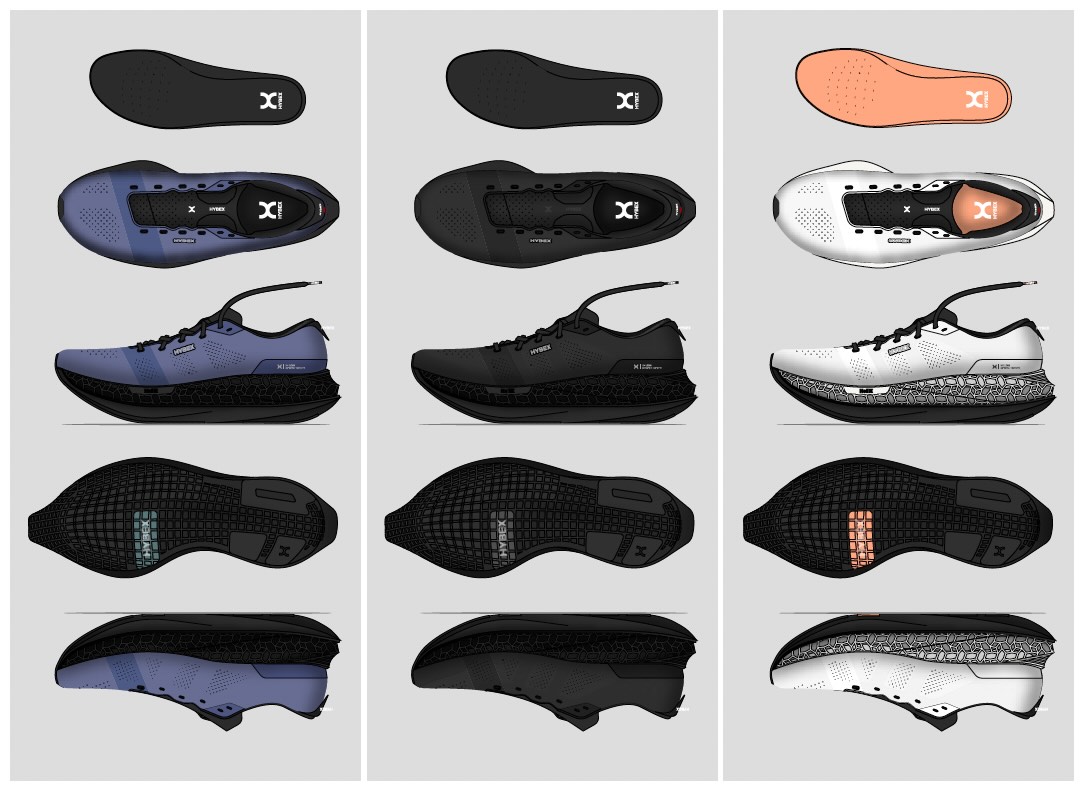
画像提供:HYBEXImages courtesy of HYBEX
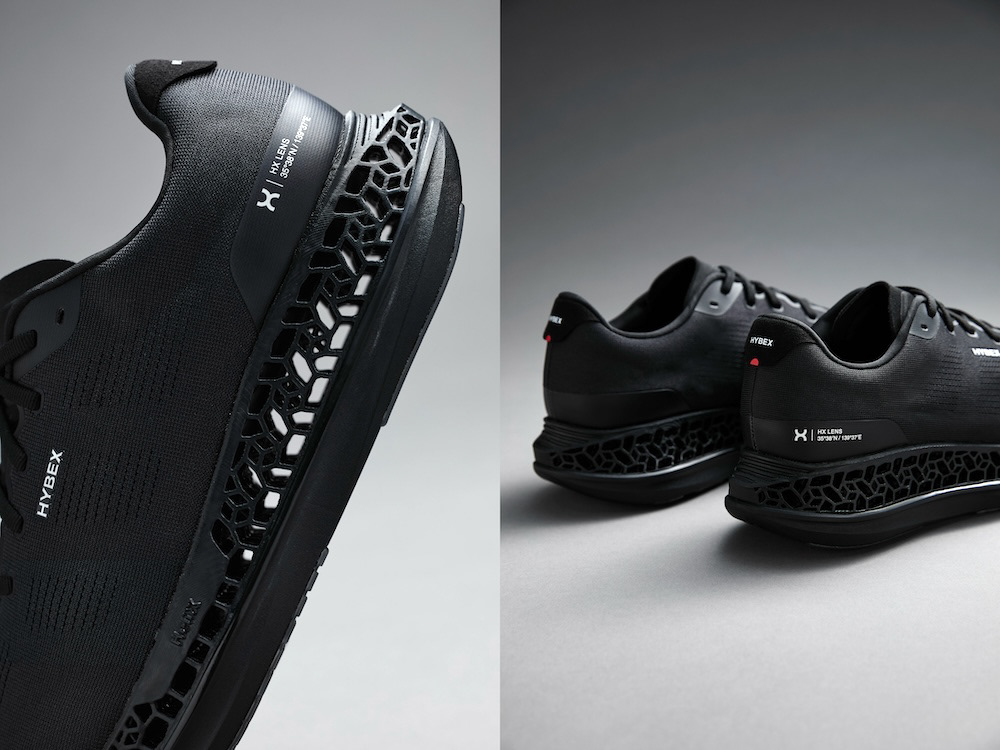
日本発のパフォーマンスランニングブランド「HYBEX(ハイベックス)」の第一弾モデル「HX LENS」の開発に、建築構造エンジニアとして参画。「3Dプリントで、競技用にも使える、これまでにない挙動の靴を作りたい」という挑戦から始まり、建築構造・解析・3Dプリントを専門とするメンバーとともに、特許技術「HeliX構造」——前に回転しながら潰れるソール構造——を設計した。2026年2月20日発売。
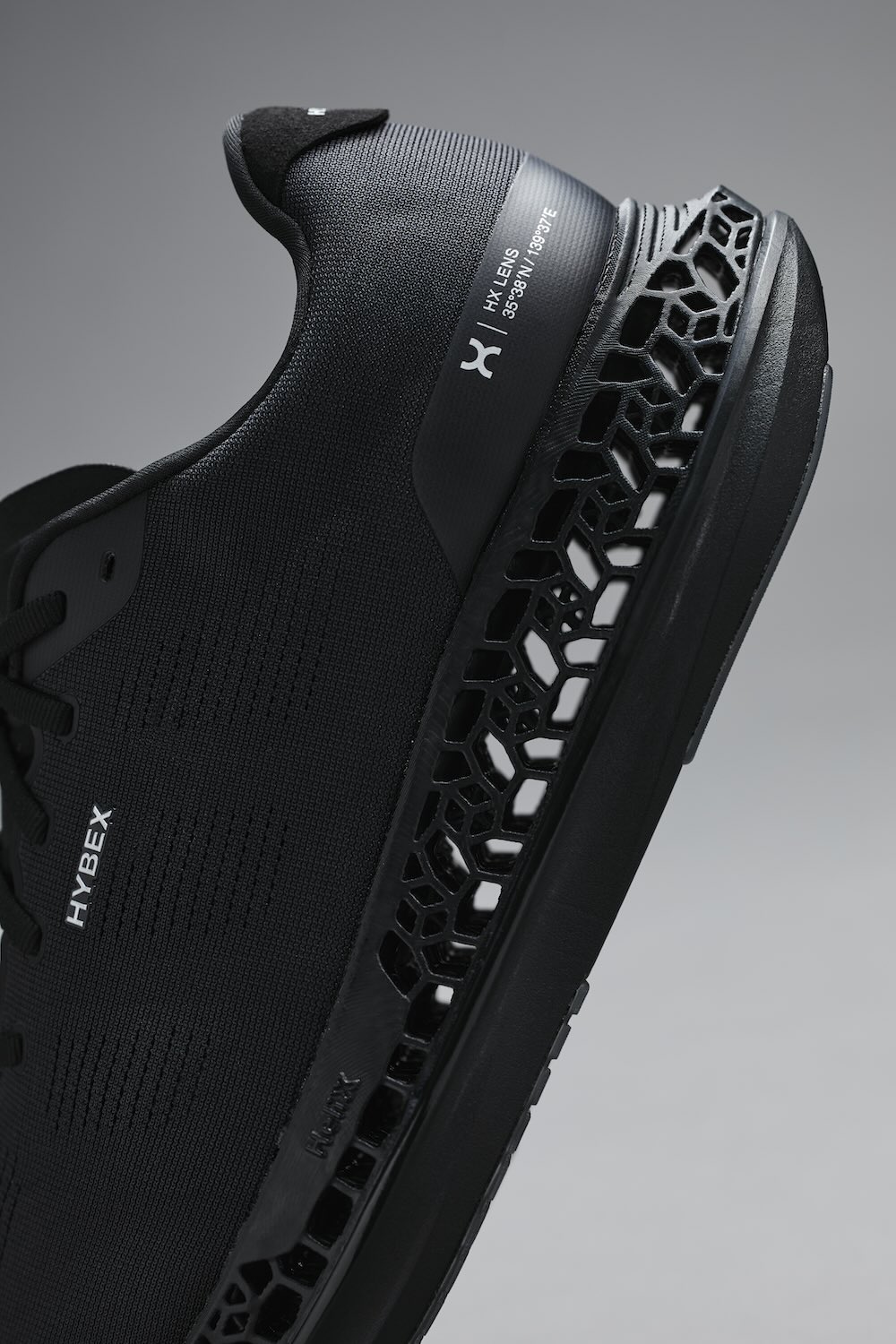
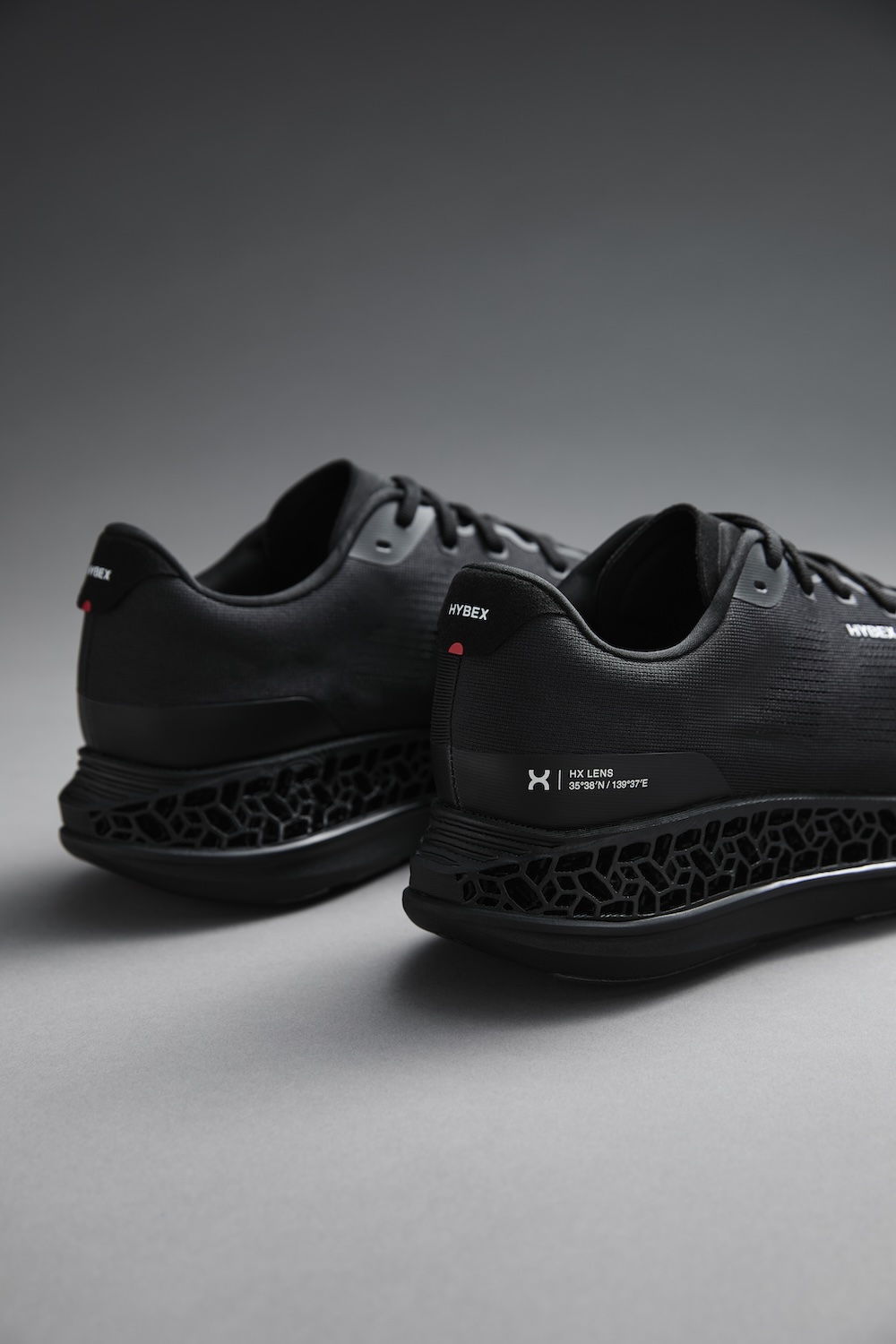
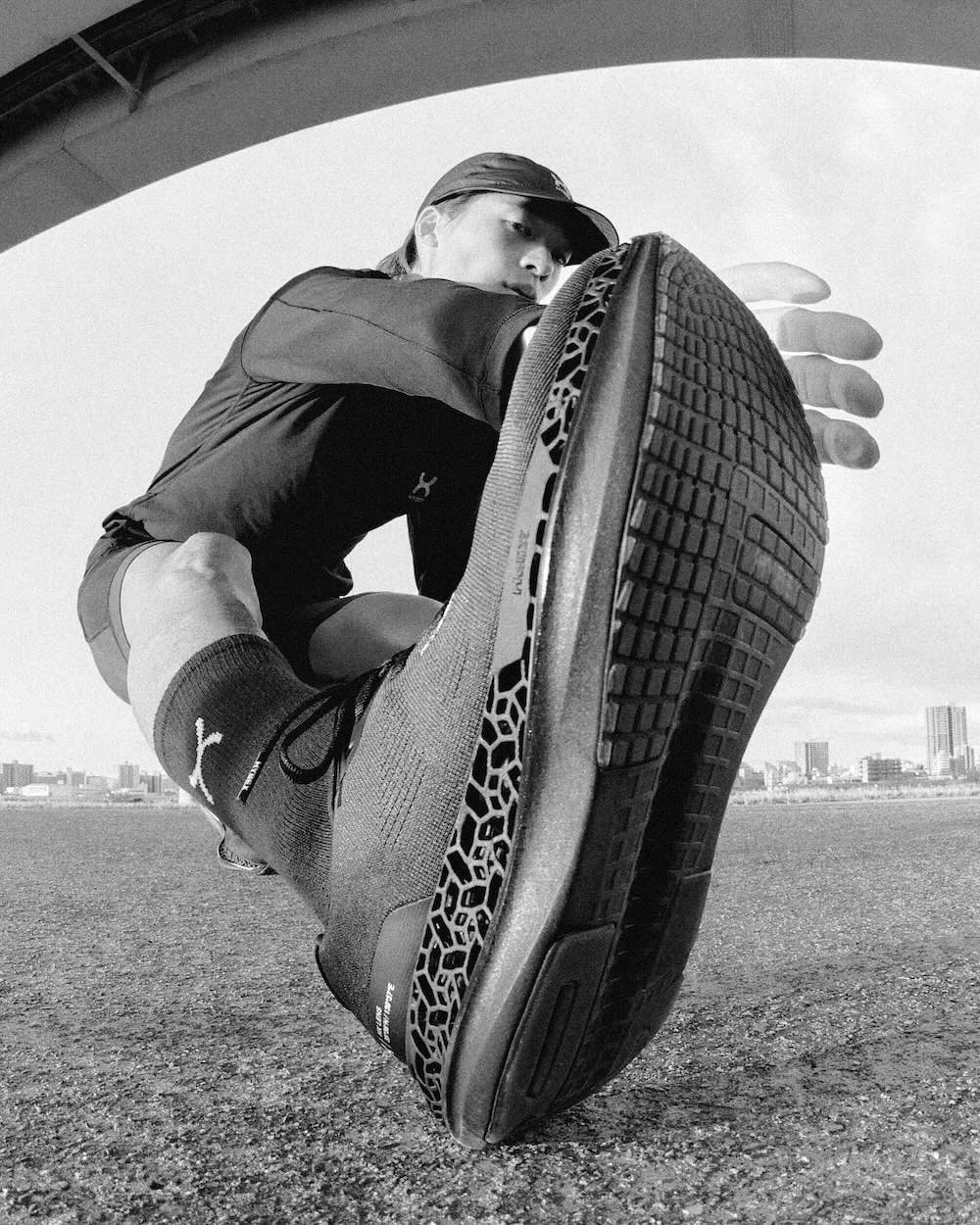
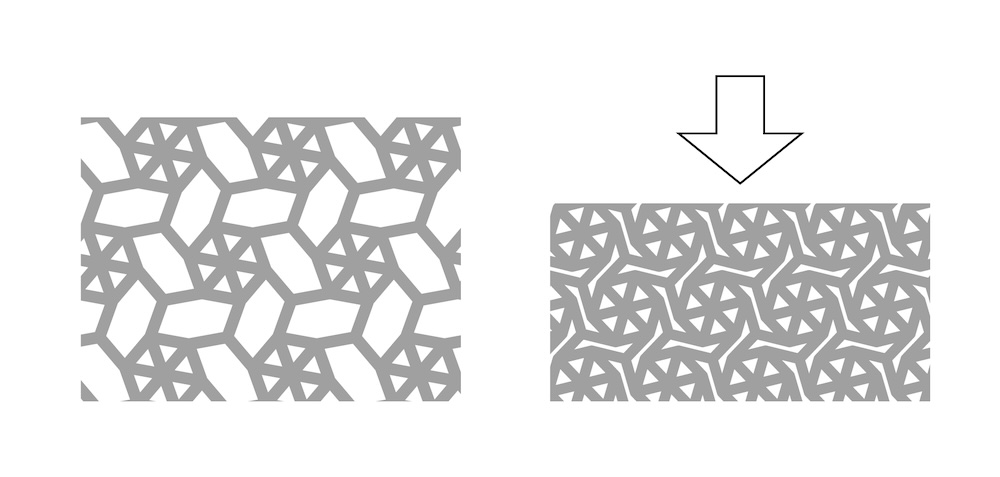
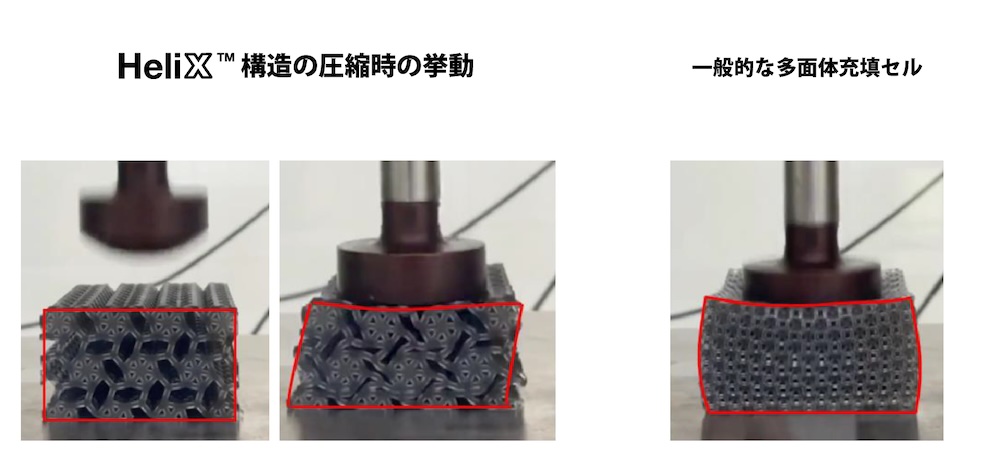
建築の構造設計では、重力や地震に対して建物が変形しないことが重要だが、その力学の職能を応用すれば、逆に狙った通りに動く構造を設計することもできる。HeliXソールの核心は、下向きの踏み込みの力を前方への推進力へと変換してブレーキを抑える点と、最初は柔らかく荷重が増すほど硬くなる2段階の剛性を1つの構造体で両立させた点にある。これを可能にしたのが、3Dプリントによるメカニカルメタマテリアルの設計である。正六角形が回転しながら花びらのように開閉する独自のユニットセルを並べたラティス(格子)は、踏み込みの初期には柔軟部が前方へ回転して衝撃を緩和しつつ推進力を生み、変形が進むと剛体部同士が接触して高密度化し、反発力を生む。
3DプリントされたEPU(弾性ポリウレタン)のラティスと、軽量で反発性に優れた超臨界発泡フォームを複合化することで、先行する同種の3Dプリントシューズ(約350g)に対し245gという軽量化を実現した。巨大な建築をつくる力学や幾何学の知見は、足元の数センチという小さな空間にも応用できる。
Participated as an architectural structural engineer in the development of "HX LENS," the debut model from Japanese performance running brand HYBEX. The project began with the challenge of making a 3D-printed shoe with unprecedented behavior that could also be used for competition. Together with a team specializing in structural engineering, analysis, and 3D printing, we designed the patented "HeliX" sole structure, which collapses while rotating forward. Released February 20, 2026.
In building design, the structural engineer's job is to keep a building from deforming under gravity and earthquakes. The same mechanics can be applied in reverse, to design a structure that moves exactly as intended. The HeliX sole does two things: it converts the downward force of each footstrike into forward propulsion, suppressing braking, and it combines two stages of stiffness in a single structure, soft at first and stiffer as the load increases. This is made possible by a 3D-printed mechanical metamaterial: a lattice whose custom unit cell, a regular hexagon that opens and closes like flower petals as it rotates, lets the flexible parts rotate forward on impact to absorb shock and generate propulsion, then densifies as the rigid parts come into contact, producing energy return.
By combining the 3D-printed EPU (elastomeric polyurethane) lattice with a lightweight, highly responsive supercritical-foamed material, the shoe weighs 245 g, compared with roughly 350 g for earlier 3D-printed shoes of the same kind. The mechanics and geometry used to build large-scale architecture can be applied even to the few centimeters beneath our feet.
TECTURE MAGHYBEXHYBEX (Instagram)
← Works